Loading video...

Video Failed to Load

Go Home

Why High LDL Didn’t Increase Plaque Risk Data shows that years of elevated LDL did not lead to plaque progression as commonly expected. After long-term exposure, most participants saw stable plaque scores, with LDL and ApoB showing no link to plaque growth. Learn what actually predicted plaque changes and...

40,939 views • 5 months ago •via X (Twitter)

0 Comments

No comments available

Comments from the original post will appear here

Related Videos

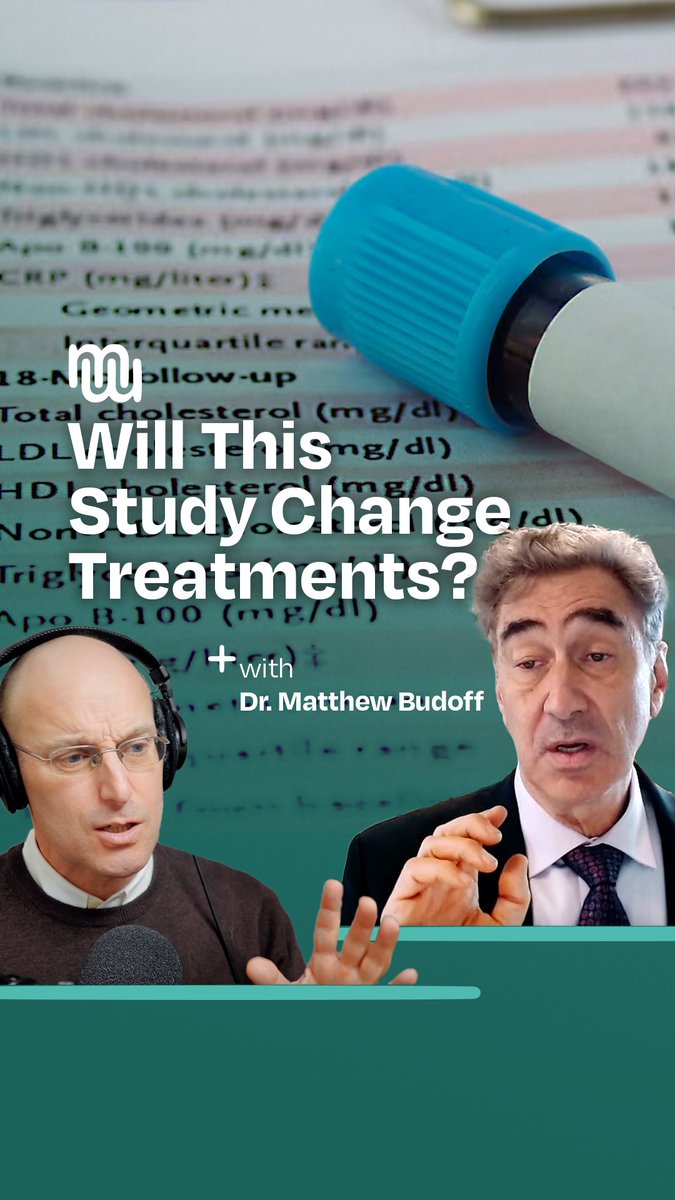
There’s been a lot of buzz—and confusion—about the new Keto-CTA study, examining plaque progression in Lean Mass Hyper-Responders (LMHRs). Much of the social media debate has centered on whether high LDL on keto is safe or dangerous, driven largely by how to interpret the supplemental table comparing this study to others on LDL and plaque progression. In this episode of the Metabolic Mind Podcast, we sit down with Dr. Matthew Budoff, a world-renowned cardiologist, cardiac CT researcher, and the study's lead investigator, to discuss the the supplemental table, what the plaque markers mean, and how this fits into the discussion of high- vs -low-risk plaque progression. In this episode, we cover: ✅ What PAV (Percent Atheroma Volume) is, what it actually measures, and why it matters ✅ Why a 50% increase in plaque may sound scary, but can be deceiving ✅ The difference between “treatment-naive” and “treated” participants ✅ What the Miami Heart Study comparison reveals about keto, LDL, and plaque ✅ Why LDL alone may not tell the whole story about heart disease risk ✅ How some high-risk individuals may still benefit from statins and other therapies This study doesn’t answer whether keto causes heart disease or not. Instead, it shows that high LDL on a ketogenic diet is not a reliable predictor of plaque progression across all individuals. What is predictive? The presence of existing plaque. 💡 Key takeaway: Relying on surrogate markers of heart disease, like LDL and ApoB, is not the best way to assess heart disease risk in all populations. If you're concerned about how elevated LDL may be affecting your heart health, the best next step is to speak with your doctor about cardiac imaging to directly assess plaque and gain a clearer picture of your individual risk. Expert Featured: - Dr. Matthew Budoff - X: - Resources Mentioned: Plaque Begets Plaque, ApoB Does Not CMEs Mentioned: Managing Major Mental Illness with Dietary Change: The New Science of Hope Brain Energy: The Metabolic Theory of Mental Illness Follow our channel for more information and education from Bret Scher, MD, FACC, including interviews with leading experts in Metabolic Psychiatry. Learn more about metabolic psychiatry and find helpful resources at

Metabolic Mind

98,147 views • 1 year ago

What if everything we thought we knew about cholesterol and heart disease risk… doesn’t apply to everyone? In this episode, world-renowned cardiologist Dr. Matthew Budoff unpacks the results of a landmark one-year study tracking 100 lean, metabolically healthy individuals on a ketogenic diet with extremely elevated LDL levels. Dr. Budoff is the Program Director, Director of Cardiac CT, and the endowed chair of preventive cardiology at The Lundquist Institute for Biomedical Innovation at Harbor-UCLA Medical Center. In this interview, Dr. Scher and Dr. Budoff further break down the results of his new publication, which used advanced imaging to demonstrate that LDL cholesterol and ApoB levels are not associated with plaque progression in Lean-Mass Hyper Responders following a #ketogenicdiet. 📊 Surprising insights: • Elevated LDL and ApoB did not predict plaque progression • Some participants with LDLs over 500 showed no plaque at all • A few participants even experienced plaque regression • Existing plaque—not LDL-C or ApoB—did predict plaque accumulation in this population Dr. Budoff explains what these results mean for clinicians, for patients using ketogenic therapy as a medical intervention, and for the broader conversation around cardiovascular disease risk. “It is important that clinicians, along with the general public, are made aware that personalized, data-driven approaches to assessing risk should be considered based on individual conditions,” said Dr. Budoff. “The existence of this phenotype suggests that alternative markers or tests should be used to establish metabolic health in some cases.” 🎬 These exciting new findings are featured in Dave Feldman and Jen Isenhart’s upcoming documentary, The Cholesterol Code, the story of how a software engineer conducts a groundbreaking study on an unusual group of people—lean, healthy individuals whose doctors are convinced they’ll die young. Real stories of healing with ketogenic diets provide a blueprint for using food as powerful medicine. Visit to learn more about the film and to be the first to hear about private screenings and the general release in the fall. Expert Featured: Dr. Matthew Budoff Matthew Budoff MD Resources Mentioned: Plaque Begets Plaque, ApoB Does Not Diagnostic and Preventative Cardiovascular Imaging Center CMEs Mentioned: Managing Major Mental Illness with Dietary Change: The New Science of Hope Brain Energy: The Metabolic Theory of Mental Illness Learn more about metabolic psychiatry and find helpful resources at

Metabolic Mind

10,423 views • 1 year ago

"Cholesterol Is The Most Important Molecule In The Body...Don't Blame Cholesterol For The Harm That Calcium Causes." Dr Hal Huggins "1.5% Of Arterial Plaque Is Fat & Of That 0.5% Is Cholesterol." "90% Of The Plaque Is Calcium. So Where's The Problem...Calcium Or Cholesterol?" Cholesterol isn’t the enemy. In fact, it’s one of the most essential substances in your body. 60% of your brain is fat & 30% of that is cholesterol. Your hormones, cell membranes & nervous system all depend on it. The mainstream message that high cholesterol causes clogged arteries is fraudulent & wrong. Studies show that arterial plaque is mostly calcium — not cholesterol. Only 0.5% of the plaque is cholesterol. The rest? Over 90% is calcium buildup. Atherosclerosis Is An Inflammatory Disease, Not A Cholesterol Disease or A Statin Deficiency. Cholesterol is not the cause of the Inflammation that turns to arterial plaque & atherosclerosis. Eliminate The Root of The Inflammation Which Causes The Arterial Damage: Low Vitamin D Levels Magnesium Deficiency K2 Deficiency Calcium Supplements Industrial Seed Oils Processed Sugar Carbohydrates Insulin Resistance Ultra Processed Foods Smoking Obesity Environmental Toxins Poor Sleep Lack of Exercise Stress A whole food, low carbohydrate diet prioritizing nutrient dense animal foods, eliminating harmful seed oils & sugar, provides the best healthy cholesterol profile. This lifestyle keeps Triglycerides low & HDL high, which is one of the best biomarkers for heart health. TG/HDL ratio optimally should be 1.5 or less. 👇The Higher Your LDL, The Longer You Live👇 👇LDL Paradox: Higher LDL, Greater Longevity👇 👇LDL Does Not Cause Cardiovascular Disease👇 Speaker: Dr Hal Huggins Video: WR

Valerie Anne Smith

246,121 views • 10 months ago