Loading video...

Video Failed to Load

Go Home

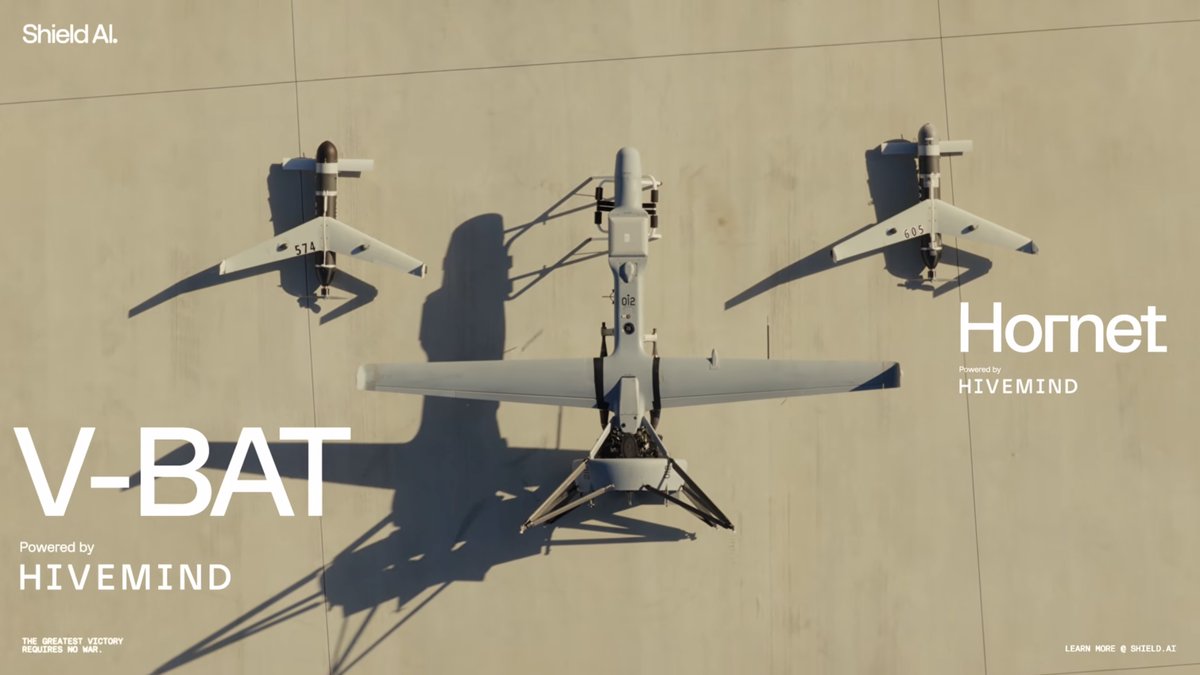
L&T PES has developed CHANAKYA, a decentralized autonomy framework for UAV swarms. It enables flocking, mission-level autonomy, collision avoidance, and coordinated surveillancesuccessfully demonstrated through synchronized fixed-wing UAV flight trials operating as a single cohesive unit.
19,502 views • 8 months ago •via X (Twitter)

0 Comments

No comments available

Comments from the original post will appear here

Related Videos

🇹🇷 THREE DRONE INCIDENTS IN FIVE DAYS TEST TURKEY'S AIRSPACE AS BLACK SEA TENSIONS RISE Turkey recorded three separate UAV incidents between December 15-20, raising questions about Russian drone activity near NATO territory. INCIDENT 1: December 15 - SHOOTDOWN Turkish F-16s scrambled after detecting an unidentified aerial track approaching from the Black Sea. The UAV was assessed as "out of control" and destroyed outside populated areas. Debris fragmented on impact, complicating identification. No attribution announced. INCIDENT 2: December 19 - ORLAN-10 FOUND Residents in Kocaeli province discovered a damaged UAV in an agricultural field near İzmit. Initial assessment identified it as a Russian-origin Orlan-10 reconnaissance drone. Photos showed a red star marking. The Orlan-10 is widely documented in the Ukraine war for surveillance missions. Authorities have not explained how it reached northwestern Turkey. INCIDENT 3: December 20 - UNIDENTIFIED CRASH Farmers in Balıkesir province reported another UAV crash in an empty field. The aircraft was transferred to Ankara for technical examination. The drone visually resembles the Russian Merlin-VR, a long-range reconnaissance UAV capable of 600km range and 10-hour flight time. Each unit costs approximately $300,000. Ukraine has destroyed at least 12 since 2022. THE BIG PICTURE: Three drones. Five days. A NATO member's airspace. Turkey has not confirmed any link between the incidents or made official attribution. Source: Turkish Defense Ministry, Clash Report

Mario Nawfal

32,249 views • 9 months ago

In this demo we extend our prior work on obstacles avoidance at aggressive speeds, showcasing our Thar based autonomous vehicle navigating at near drift speeds, progressing towards our endeavour of Level-5 autonomy. Our autonomous vehicle at Swaayatt Robots was tasked with avoidance of traffic cones on the road, placed in a zig-zag fashion, at aggressive speeds. The location of the marked cones was not known to the planner beforehand. The #autonomousdriving task, i.e., motion planning (time parametrized trajectory computation) and decision making, was made even more challenging by restricting the AI agents to not act on obstacles unless they are within 24m radius. Level-5 #autonomousvehicles should be able to react quickly to overtake, or to avoid, any sudden unforeseeable obstacle or pedestrian on the road to avoid fatalities -- a capability demonstrated by our novel motion planning and decision making algorithmic framework over here. Our previous demo showcased our Bolero based platform consistently keeping speeds beyond 45 KMPH for most part, slowing down to only 39 KMPH at one point. Given Thar has lesser body roll, our framework successfully kept speeds well above 47 KMPH (even at the points of avoidance of obstacles), with speeds reaching as high as 55 KMPH. A typical human driver would feel uncomfortable at speeds beyond 40 KMPH in such as scenario. The entire algorithmic framework with 5 classical (one #reinforcementlearning-) agents , runs at 800+ Hz on a regular i7 processor, single thread. This algorithmic framework is being further scaled up with end-to-end deep reinforcement learning, and will be showcased in the month of March. #deeplearning #machinelearning #motionplanning

Sanjeev Sharma

12,841 views • 1 year ago

🚨🇨🇳 PENTAGON IN PANIC: CHINA FLIES HEAVY DRONE WITH 1,900-KM RANGE AND VERTICAL TAKEOFF China’s 1.5-tonne Qizhi-5 heavy tiltrotor UAV completed an autonomous flight test at the Chuzhou test base on August 1, performing vertical takeoff, hover, transition into forward flight, manoeuvring and landing without requiring a runway. 🔸 The aircraft is designed to combine helicopter-style access with fixed-wing performance. Its stated specifications include a top speed of 450 km/h, a 300 kg payload and a maximum range of 1,900 km. 🔸 Power comes from the domestically developed CS35 modular turboshaft engine, rated at 350 kW. Its modular architecture is intended to simplify maintenance and allow the engine to support multiple aircraft types. 🔸 The most important part of the test was the autonomous transition between vertical and forward flight. During this phase, lift shifts from the rotors to the wings while the aircraft’s aerodynamics, controls and power demands change rapidly. 🔸 Completing the full sequence demonstrated that the airframe, propulsion system and flight-control software can operate together through the aircraft’s most technically demanding flight mode. 🔸 The developers say the programme has mastered six major areas: overall configuration, transmission, rotor design, flight control, structural engineering and aeroacoustic noise reduction. 🔸 Qizhi-5 is being promoted for cargo transport, surveillance, emergency response and other low-altitude operations. The same runway-independent design also offers clear value for military logistics, reconnaissance and operations from dispersed sites. The Qizhi-5 can lift vertically from a confined area and then travel at aircraft speeds across distances normally associated with fixed-wing drones. That combination gives China access to locations where conventional UAVs still need a runway. Which Qizhi-5 advantage matters most: vertical takeoff, 300 kg payload, 450 km/h speed or 1,900 km range?

NewRulesGeopolitics

16,903 views • 1 month ago

Failed attempts to reach a single objective: control, evolution, and immortality. Eveline A bioweapon developed to achieve obedience through psychological manipulation and forced emotional attachment. The result was artificial familial bonds, severe mental instability, and complete psychological breakdown. The experiment demonstrated that emotional manipulation cannot produce genuine humanity. Las Plagas A parasitic organism capable of enhancing physical abilities and enabling shared cognition. However, it overrides individual autonomy and free will. The outcome is increased physical power at the cost of mental independence. This confirms that evolution without autonomy is not true advancement. Progenitor Virus The foundational organism from which subsequent bio-organic weapons originated. Intended to create a superior form of human life, it instead resulted in extreme mutations and biological instability. Forced evolution consistently led to physical and genetic degeneration. Immortality Virus A research project aimed at halting cellular aging and achieving biological immortality. While preserving the physical body, it failed to maintain mental and personal integrity. The pursuit of immortality without equilibrium resulted in irreversible loss of identity. Spencer These projects ultimately served the vision of a single individual. A man who sought transcendence beyond humanity, yet fundamentally failed to understand human nature. His downfall stemmed from viewing humans as experimental subjects rather than living beings. --- And then comes a different name. Not a virus. Not a parasite. Not a forced experiment. E + L + P + I + S = Elpis Hope after every failure #ResidentEvilRequiem #ResidentEvil #REBHFun #RE9

Abdullah | SpookyHoo 📴

56,816 views • 8 months ago

AAI clearances delay UAV testing at Challakere ATR despite surge in desi programmes By Anantha Krishnan Muralidharan Nair Tarmak Media House #TMH FORT KOCHI (KERALA), 19 MAY 2025: India’s push for indigenous unmanned aerial systems is encountering turbulence at the Aeronautical Test Range (ATR) near Chitradurga, Karnataka, with multiple UAV developers raising concerns over persistent delays caused by mandatory clearances from the Airports Authority of India (AAI). A subscale High-Altitude Platform (HAP) UAV, developed by CSIR-NAL, recently achieved back-to-back test flights at 24,000 ft AMSL, demonstrating notable robustness and reliability. The test missions were conducted from the DRDO-run ATR, which falls under the Aeronautical Development Establishment (ADE). The ATR has emerged as a critical testbed for India’s UAV ecosystem, involving both government agencies and private industry. NAL’s HAP -- now in its fourth year -- has attracted particular attention from the Indian Air Force #IAF. Touted as a loitering munition with stealth capabilities, the platform aims to scale 40,000 ft shortly, with an eventual goal of 70,000 ft. Its applications span both military and civilian domains, with swarming capability being a key focus for the IAF. Yet, despite this momentum, UAV developers report consistent setbacks due to AAI’s clearance protocols. Every trial requires prior approval from AAI -- a process they describe as time-consuming and operationally disruptive. “ATR lies beneath a busy civil aviation corridor -- the Bengaluru–Chennai–Bengaluru sector. Alongside DRDO and NAL, ISRO also uses the range for testing its Reusable Launch Vehicle (RLV),” said an official familiar with the matter. ATR’s current 2-km-plus runway is undergoing planned expansion, and several support facilities -- including a wind tunnel for UAV testing -- are expected to become functional within the next two years. However, developers are calling for urgent reform in test protocols, especially after the boost in indigenous UAV activity following Operation Sindoor. “ATR should be designated as a permanent exclusion zone for civil air traffic. Its surrounding airspace must be reserved solely for defence testing. The current SOPs involving repeated NOTAMs are delaying critical trials. AAI should have no jurisdiction over strategic military ranges,” the official asserted. Repeated attempts to contact Union Civil Aviation Minister Kinjarapu Rammohan Naidu on his mobile phone were unsuccessful. A text message sent to one of his Personal Assistants following a brief exchange also went unanswered. AAI Executive Director (CNS & Planning) Suneel Dutt responded to a call but clarified that he is not the concerned authority on the issue. It remains to be seen whether this pressing matter will receive due attention during the high-profile drone warfare strategy session currently underway in New Delhi. ©TarmakMediaHouse (TMH) #ATR #Challakere #ISRO #DRDO #NAL #UAV #HAPS #CSIR #Military #Drones #AAI #AirportAuthorityofIndia #TarmakMediaHouse #TMH #IndiaFirst Tarmak Media House l #TMH l Formerly Tarmak007 Billion Beats Onmanorama Madhavdas G. Airports Authority of India Adedayo Osholowu ISRO CSIR, India CSIR-NAL Ram Mohan Naidu Kinjarapu PMO India

Anantha Krishnan M🇮🇳

32,621 views • 1 year ago

🔶 Shib Tech Stack: From Meme to Modular Infrastructure 🔶 What started as SHIB — a decentralized experiment — has grown into a full-stack Web3 ecosystem built for scale, privacy, and real utility. SHIB → The Origin The token that launched the community. Fairly distributed and community-led. Leash → Scarce by Design Limited supply, evolving purpose. Used for early access, NFTs, and ecosystem incentives. Bone → Gas and Governance The operational core of Shibarium. Powers transactions and governance across the network. ShibaSwap → Native DeFi A decentralized platform for swapping, staking, and earning — designed for Shib ecosystem tokens. Shiboshis → Identity NFTs 10,000 collectibles that serve as digital identity and access points within the ecosystem. Shibarium → The L2 Core An Ethereum-compatible Layer 2 built for speed, low fees, and high throughput — with Bone as gas. Dev Portal → Tools to Build Everything developers need: RPCs, Paymaster, APIs, oracles, faucet access, and SDKs. Dapp Store → Shibarium Front Door A curated marketplace for discovering and using Shibarium-based applications. The Metaverse → Digital Space An interactive 3D world for land ownership, creation, and on-chain utility. Sheboshi (DN404) → Next-Gen NFTs On-chain, gas-efficient NFTs built on the DN404 standard — combining ERC-20 and ERC-721 traits. Treat → Encrypted DeFi Enables privacy-focused smart contracts through Fully Homomorphic Encryption (FHE). Shib Identity → On-Chain Credentials Decentralized identifiers for user authentication, access, and reputation. Shib OS → Application Framework The operating layer that connects identity, logic, data, and UI for Shibarium-native dapps. Shib Alpha Layer → Unified Protocol The Alpha layer — where compute, privacy, identity, and value converge into one cohesive system. Shib is no longer just a token. It’s an integrated tech stack — decentralized, modular, and built to scale.

Shibarium | SHIB.IO

15,688 views • 1 year ago