Loading video...
Video Failed to Load
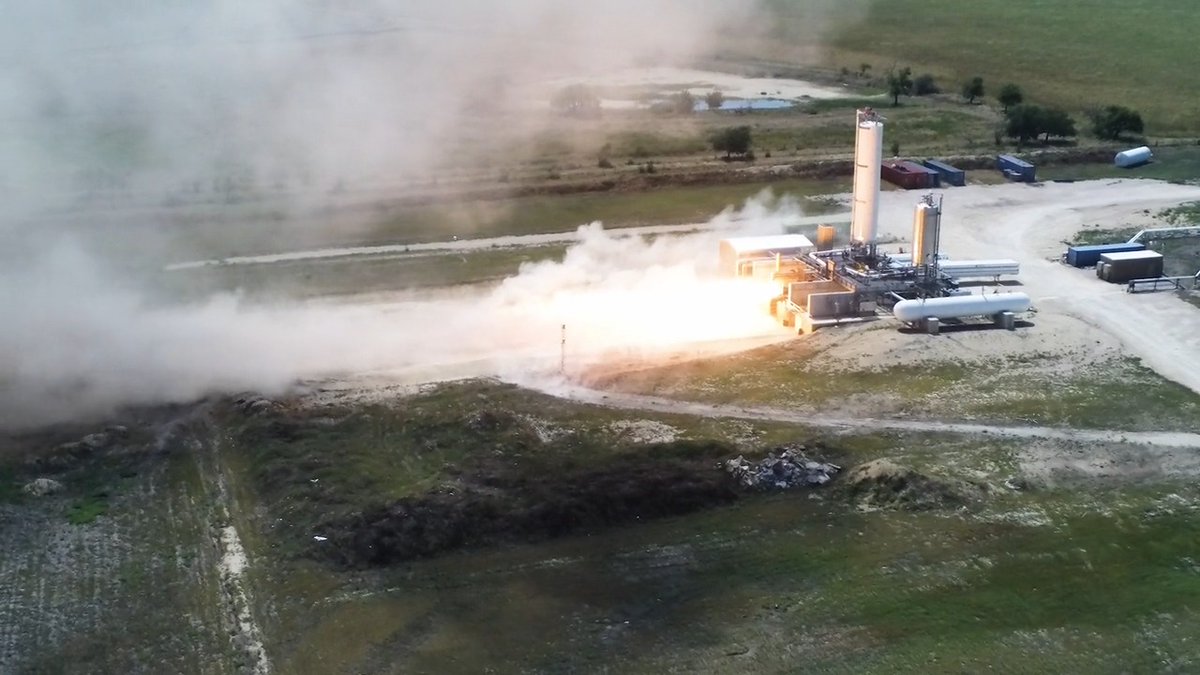
🧵Take a deep dive into the Aeon R engine thrust chamber assembly with our propulsion team. This critical engine component generates about 5 million horsepower, equivalent to the power of 5,000 F1 race cars. ▶️

17,623 views • 2 years ago •via X (Twitter)
11 Comments

🚀 The TCA is made up of 3 main parts: the main injector, combustion chamber, and skirt. The main injector converts chemical energy in the propellants into thermal energy through combustion. The combustion chamber and skirt then turn this thermal energy into kinetic energy, propelling the rocket forward.
🛠️ What sets the Aeon R TCA apart? The innovative use of additive technologies. We leverage wire arc additive manufacturing (WAAM) and other methods to 3D print components.
⏱️ With additive technology, we can go from design to testing in just 3 months, allowing rapid iterations and improvements.
💡 We’ve done 14 design-print-test iterations of the main injector, boosting performance and reliability—impossible with traditional manufacturing.
🖨️ Powder bed fusion printing simplifies production, reducing thousands of parts into single pieces printed in days, cutting costs significantly.
🌬️ Additive manufacturing enables intricate cooling geometries and fluid passages, creating unique designs that meet performance and durability goals.
🔧 Using NASA's GrCop-42 alloy and high-strength nickel, we optimize the main combustion chamber's thermal and structural properties.
🌡️ The Aeon R engine withstands temperatures over 6,500°F, more than half the surface temperature of the sun and about 10 times what you'd see in a typical household oven, any metals are typically going to melt at these temperatures. Enter: Regenerative cooling.
💦 Regenerative cooling channels fuel through the combustion chamber walls, pulling heat away and recycling it for combustion—a win for efficiency!
🧑🔬 Leveraging testing @NASAStennis E1 test stand we're able to test the thrust chamber and the injector independently of the rest of the engine in parallel with the turbo machinery development.
🌌 Join the team - we're not just making rockets; we're pioneering technologies that could become industry standards.