Загрузка видео...

Не удалось загрузить видео

На главную

Here's how I'm generating game ready art assets for my vibe coded game; → No coding → No photoshop. → No asset packs. Instead I'm using → Codex CLI → GPT 5.4 → GPT Image 1.5 → Sora 2 Idle anims, walk cycles, attack, crouch, jump ... Full video...

80,999 просмотров • 4 месяцев назад •via X (Twitter)

Комментарии: 0

Нет доступных комментариев

Здесь появятся комментарии из оригинального поста

Похожие видео

This custom GPT writes Sora 2 prompts that actually work 🤯 Most people prompting Sora 2 are getting garbage output. The problem isn't Sora 2. It's your prompts. Here's what I figured out after generating 100+ UGC videos: Sora 2 needs hyper-specific instructions—shot composition, timing, camera movement, lighting, scene details. Most people prompt like this: "Make a UGC video of someone using my skincare product" And then wonder why the output looks like AI slop. What actually gets results: "9:16 vertical handheld shot, soft natural window lighting, female creator mid-20s in bathroom mirror holding [brand] serum at eye level, genuine testimonial energy, 0-3s hook showing application and subtle reaction, shallow depth of field, clean warm color grade" That's the gap between unusable content and scroll-stopping UGC. So I built a custom GPT that writes these prompts for you: → Tell it your product (supplement, skincare, SaaS, whatever) → It generates a detailed timeline-based Sora 2 prompt → Shot composition, camera angles, timing breakdowns—all included → Optimized for 9:16 TikTok/Reels format → Copy and paste directly into Sora 2 No guessing. No prompt engineering rabbit holes. No "why does this look terrible" frustration. Professional UGC prompts in 10 seconds. Want free access to the Sora 2 Prompt Generator GPT? > Comment "SORA" > Like this post And I'll send it over (must be following so I can DM)

Mike Futia

13,341 просмотров • 7 месяцев назад

THIS GUY VIBE CODED A FULL CAPYBARA FOOD DELIVERY GAME IN 2 WEEKS WITH CLAUDE CODE you play as a capybara delivering food on a bike. orders stack on the back, you have a phone with apps in-game and the whole delivery system is realistic 2 weeks, zero game dev experience, and ENTIRELY AI generated the full stack: > claude code for all the code > three.js for the 3D engine > suno for original music > elevenlabs for sound effects and voice > GPT images-2 and grok for textures and illustrations > tripo3d for generating all the 3D assets the cinematics are all in-game too. he asked claude to build a cinematic editor with timeline controls, camera animation, and transitions. then he just placed the cameras himself his workflow was more planning than coding (obviously): > come up with the core mechanic > plan every feature using claude /plan mode > generate assets with AI tools > spend most of his time on the final polish, prop placement, and making the design feel right he said the human part is what most vibe coded games are missing. AI can generate everything but having taste for what looks good and what feels right is still on you the game is playable right now in the browser this is what vibe coding is actually capable of in the game dev space right now a year ago this would have taken a small team of developers, a sound designer, and an artist working together for months now one person with no experience can ship a polished playable game with story, music, and mechanics in 14 days the tools keep getting better and the barrier to making real games keeps getting lower

Om Patel

241,259 просмотров • 3 месяцев назад

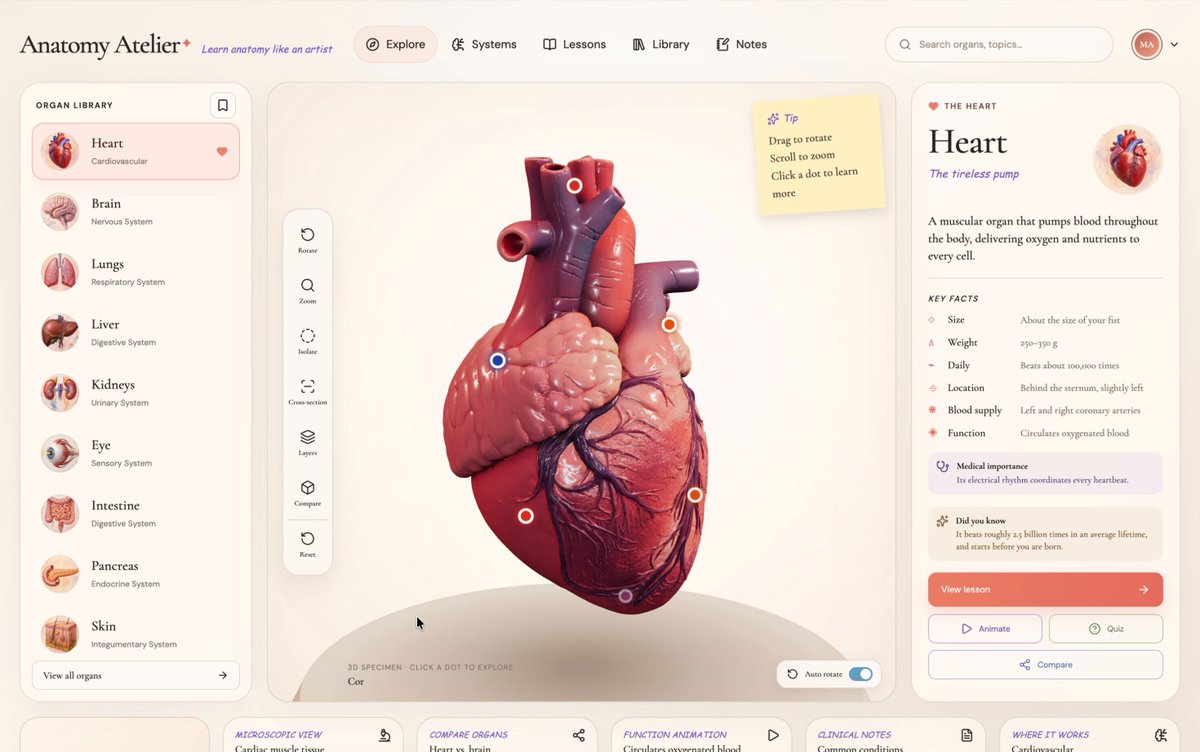
Only if education could be this interactive ❤️‍🔥 I've had a looong wish to build something genuinely useful through vibe coding, and I finally did it. A 3D human anatomy application built with Three.js using GPT 5.6 Sol. It all started with a single design image that I created using GPT Image 2.0. I then used it to generate every 3D organ image, one by one. Next, I converted each of those images into 3D models using Tripo (and no, they didn't sponsor this 😄). After that, I opened Codex, wrote a master prompt based on the design, and gave it the prompt, the design image, and all the 3D models. Codex built the first version beautifully, but there was one big problem. Every single 3D model was nearly 120-150 MB. That obviously wasn't practical for the web and was giving a performance of 16fps. After a few iterations, Codex optimized each model down to roughly 2–5.5 MB while preserving the visual quality, reducing the total asset size from ~900 MB to just 28.6 MB. And each model loads on demand. Along the way, Codex also generated those anatomical illustrations showing where each organ sits in the human body, and even created the interactive hotspot markers that explain different parts of every organ. It handled all of that. The process wasn't exactly one shot, but it also wasn't difficult. You just have to do it step by step. It genuinely felt like building something that could make learning anatomy much more engaging. The inspiration came from Dilum Sanjaya's 3D animal plant cell project. I remember seeing it and thinking, "I want to build something like this one day." And I did it :D Live: Code:

The Bugged Dev

1,912,214 просмотров • 3 дней назад